

Choosing the right pruners. Your hand size and grip strength
and the type of pruning you’ll be doing are important factors in choosing a pruner.
Pruners can be broken down into two basic categories: anvil and bypass.

Anvil
pruners have a fixed flat blade (anvil) and one moving blade that pins the
branch in place and then cuts it. It’s much like using a knife on a chopping
board. Anvil pruners tend to crush the branch rather that cut it. Anvil pruners
are very useful in cutting dead branches.

Bypass pruners cut like a pair of
scissors. One sharp blade cuts the branch as it moves by a thicker, unsharpened
blade. Using a bypass pruner will result in a cleaner cut and less damage to
the branch you’re working on. Hand pruners will cut stems and branches up to 1". For branches that are 1"-2", choose a lopper.

Unlock the pruner and hold it in your
hand. It should fit comfortably. Try it out. Ask to cut something with it. The
bottom line is pick a pruner that feels comfortable in your hand, that you can
use for a long time and one that makes easy cuts.
You’ll be pleased with the
results of having spent the time to find just the right pruner for you.

Felco
has been making their classic model #2 for decades, but the #6 may be a better
fit if you have small hands. Check the chart.

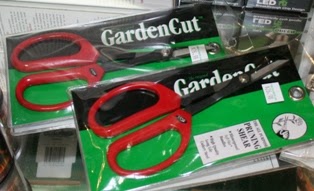 For light trimming and
deadheading, consider a pair of Garden Cut Pruning Shears. These shears stay
sharp over many cuttings. Bonsai shears offer another choice for trimming and
shaping. This one is nice because it has a finger loop to increase accuracy and
reduce fatigue. Pruning, trimming and deadheading roses and shrubs is a key
part of gardening. Having the right tools makers pruning much easier. Disinfect
pruners with a Lysol or Clorox disinfectant wipe or dip your pruners in
disinfectant solution to reduce risk of spreading disease among roses or
bushes. Once you are doing pruning and disinfecting, spray blades with a
silicone lubricant, to keep your pruners in top working shape.
For light trimming and
deadheading, consider a pair of Garden Cut Pruning Shears. These shears stay
sharp over many cuttings. Bonsai shears offer another choice for trimming and
shaping. This one is nice because it has a finger loop to increase accuracy and
reduce fatigue. Pruning, trimming and deadheading roses and shrubs is a key
part of gardening. Having the right tools makers pruning much easier. Disinfect
pruners with a Lysol or Clorox disinfectant wipe or dip your pruners in
disinfectant solution to reduce risk of spreading disease among roses or
bushes. Once you are doing pruning and disinfecting, spray blades with a
silicone lubricant, to keep your pruners in top working shape. 


