www.theflowerbin.net

www.theflowerbin.net

Thursday, June 1, 2017

Tomato Planting Tips


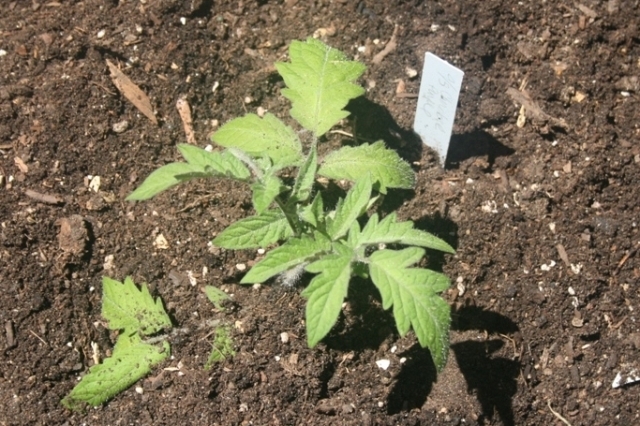
Once you've chosen the varieties of tomato plants you're going to grow this season, it's time to plant. Begin by choosing the right location.  Tomatoes need sunlight, space and good air circulation in order to grow and develop fruit. Pick a spot in the garden that gets 7 to 8 hours of sunlight and enough  space so your plants aren't crowded together. If you grew tomatoes or potatoes last season, it's important to rotate your crops  to avoid disease issues. If you don't have the space to rotate your tomatoes, replenish the soil with compost and peat moss and dust with sulfur to help prevent disease.
As you prepare the site, mix a granular fertilizer into the soil before you plant. Use Happy Frog Tomato and Vegetable or Fertilome Gardener's Special. This will provide nutrients to your plants as they start to grow. Plant your tomato starts on a cloudy day or plant late in the afternoon when the sun isn't beating down on your garden. This will reduce transplant shock and help your new tomato plants get started right.
Remove the lower leaves and plant your tomatoes deep, all the way up to the top few leaves. When planted this way, tomatoes are able to develop roots all along their stems. More roots will make for a stronger plant and healthier fruit. This does not apply to grafted tomatoes. Grafted tomatoes must be planted at the graft line.
You can either dig a deep hole or a shallow trench and lay the plant sideways. It will quickly straighten itself up and grow toward the sun. Just be careful not to drive your stake or cage into the buried stem.
Now that your plants are in the ground, it's time to talk about watering. Consistent watering produces stronger plants and better yields. Water your tomato plants well once the top few inches of soil has dried out. 
It’s best to
soak each plant  right at the base, keeping the leaves as dry as possible. Another way to tell your if your tomato plant needs watering is to watch the leaves. Some leaf wilt is normal during the heat of the day. If your plants are wilted in the morning, it's time to water. For greater yields, use sturdy cages or stakes to keep your plants off the ground.
Pinching off suckers will also help your tomato plant produce better and bigger tomatoes. 
 
About three weeks after your initial planting, start another crop of tomatoes. Planting a second crop will help ensure a longer harvest and more tomatoes to enjoy!

Thursday, May 25, 2017

Amazing annuals add instant color

When you're looking for a welcome splash of color for your garden or patio, there's nothing quicker or better than annuals.  These amazing plants do well on their own or when combined with other annuals.
Even the smallest of courtyards or balconies can find room for a hanging basket, a window box or some mixed containers filled with annuals.  
Annuals are defined as plants which complete their life cycle in one season. Annuals will sprout, grow, bloom and die in a single season. Perennials on the other hand, are plants that come back year after year. Geraniums, petunias, marigolds are common annuals that will produce uncommon colors through our gardening season. Once you’ve made your decisions and chosen the annuals you want for your landscape, it’s time to plant.
Choose the right soil to plant your new annuals in. If you're planting in a container, use a quality potting soil. High grade potting soils are light and airy, do not contain clay or garden soil or water retention crystals. If you're planting in a garden bed, take time to amend your soil with compost and peat moss. Your plants will root out better and thrive when the weather gets warmer. When taking your plants out of their plastic containers, loosen up the roots so they’ll spread out. Place them so the base of the plant is even with the soil. Next, water each plant well. Hanging baskets and container gardens need to be checked daily to make sure they don't dry out. Once your plants become established, water as needed to keep the soil from drying out.
To keep their color going strong, annuals need to be fed on a regular basis. Use what we use to feed our plants. Fertilome 20-20-20 is a balanced fertilizer designed to feed your annuals just what they need to keep them healthy and flowering throughout the season. Fertilize every 7 to 8 days.
When you're looking for plants that will add color to your garden beds or containers, look no further than annuals. Annuals add instant color to your garden and patio and with a little care, these amazing plants will provide color and interest all season long.