www.theflowerbin.net
www.theflowerbin.net
Every garden needs
pollinators and you’ll attract more pollinators to your garden if you keep
these things in mind. Bees, butterflies, hummingbirds and other pollinators are looking for three
things when they visit your garden: food, water and shelter. Food for
pollinators means nectar and pollen. The ideal plants for pollinators will produce
flowers with high nectar and pollen content. Flower shape and color are
important factors to pollinators. Hummingbirds like brightly colored,
tube-shaped flowers. Among hummingbird favorites are Bee Balm, Cardinal Flower,
Catmint and Butterfly bushes. Hummingbirds will hang around your garden longer
if there are trees and shrubs nearby for them to hide in. Butterflies can’t hover like bees and
hummingbirds.

They need flowers they can land on in order to feed. Butterfly
Bush, Phlox, Hyssop, Asters, Mums and Coneflowers are some butterfly favorites.
The ideal plants for bees will produce flowers with high nectar and pollen
content.
Nectar feeds the adult bee and pollen is harvested to feed their
young. Beyond perennials and shrubs, think about incorporating annuals and herbs
into your pollinator garden. Zinnias are bee and butterfly magnets. Plant a
nice bed of zinnias and the bees and butterflies will come. Chives are another
plant which bees love. Include herbs such as borage, comfrey, mint and lavender
in your pollinator garden. Cover crops such as Crimson Clover attract bees and
can be worked into your garden to improve the soil once it stops flowering. Gardening
with pollinators in mind will include a place for them to find water. Birdbaths are a great source of water for bees and other pollinators. Place some
flat stones in the birdbath so bees will have a place to land and drink safely.
With some thought and planning, you can make your garden a destination for bees,
hummingbirds and butterflies.
What's
better than sitting in the garden with good friends and neighbors, enjoying a
cup of coffee?

The question often comes up about the benefits of using coffee
grounds in the garden. The simple answer is coffee grounds are a great addition
to your garden and to the compost pile. Coffee grounds can help improve your
garden soil by adding micro-nutrients, improving soil structure and by
encouraging earthworm and microbial activity. The common thought is that coffee
grounds will help acidify your soil. Coffee grounds tend to be pH neutral,
around 7 on the pH scale. The acid in coffee is water-soluble, so the acid is
mainly in your coffee cup, not in the coffee grounds. It's still worth while to add coffee grounds
to your soil because doing so will help
move your soil towards neutral pH, which is good for most plants. Coffee
grounds can also improve soil structure and drainage.
A good rule of thumb is 5
pounds of coffee grounds per 100 square feet of garden. Scatter the coffee
grounds around each plant and carefully dig them in. As coffee grounds
decompose, they release some nitrogen, calcium and magnesium, important
nutrients that support plant growth.
Coffee grounds don't do well as a mulch.
They tend to develop a hard crust and will repel water, if left on the surface.
It's better to dig them into the ground.
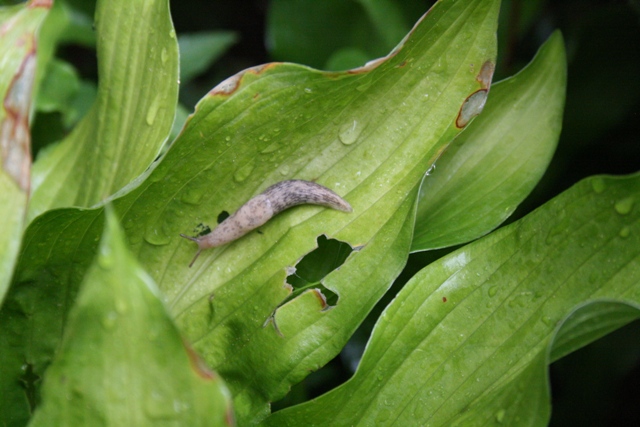
Many gardeners swear by coffee grounds
to help deter slugs. Apparently, slugs do not like to come in contact with
coffee grounds. Try it yourself, by scattering coffee grounds around hostas and
other plants in the garden. Remember to water thoroughly, because of the coffee
ground's tendency to crust over. There is also conflicting information as to
whether to add coffee grounds to your worm bins. This author has been adding
coffee grounds to my composting worm bins for a number of years with great
results. In the compost bin, coffee grounds count as a "green" or
nitrogen source. They help create heat inside the compost bin. Why not turn
your used coffee grounds into something useful in your garden.
Placing a
container next to the coffee pot will serve to remind you to save the coffee
grounds instead of throwing them away. When the container gets full, take it
out to the garden. Adding coffee grounds to your garden is just another step in
improving your garden soil and making your crops and flowers healthier.

 The ideal plants for bees will produce flowers with high nectar and pollen
content.
 Nectar feeds the adult bee and pollen is harvested to feed their
young. Beyond perennials and shrubs, think about incorporating annuals and herbs
into your pollinator garden. Zinnias are bee and butterfly magnets. Plant a
nice bed of zinnias and the bees and butterflies will come. Chives are another
plant which bees love. Include herbs such as borage, comfrey, mint and lavender
in your pollinator garden. Cover crops such as Crimson Clover attract bees and
can be worked into your garden to improve the soil once it stops flowering. Gardening
with pollinators in mind will include a place for them to find water. Birdbaths are a great source of water for bees and other pollinators. Place some
flat stones in the birdbath so bees will have a place to land and drink safely.
With some thought and planning, you can make your garden a destination for bees,
hummingbirds and butterflies.