www.theflowerbin.net

www.theflowerbin.net

Thursday, September 14, 2023

How to Grow and Care for Bearded Iris


Bearded iris has been a favorite of generations of gardeners and for good reason. They’re reliable perennials, blooming late spring into early summer. They’re easy to grow, available in a variety of bloom colors, and typically don’t require a lot of maintenance.  


Bearded Iris bear flowers with six petals: three upright petals which are called standards and three dropping petals which are called falls. The dropping petals have a fuzzy beard-like line running down the center, giving this perennial its name. 


Bearded irises grow from a thick root structure called a rhizome. As the plant matures the rhizome multiplies, resulting in more leaves and flowers. Over time, they can become crowded, and they stop producing as many blooms as possible. That’s an indication they need to be divided. Now’s the time to dig and divide bearded iris.   


The best tool to use to dig iris roots rhizomes, is a spading fork. Spading forks make it easy to get under and lift the rhizome without causing damage to the roots. Once you’ve got the clump of iris out of the ground, you’ll be able to see the rhizomes clearly.


You can divide the clump with a knife or by simply breaking off each root with your hand. Trim the leaves in a fan shape down to between 4" and 6".


Mark the leaves with the variety of the iris, so you’ll remember which one it is.  
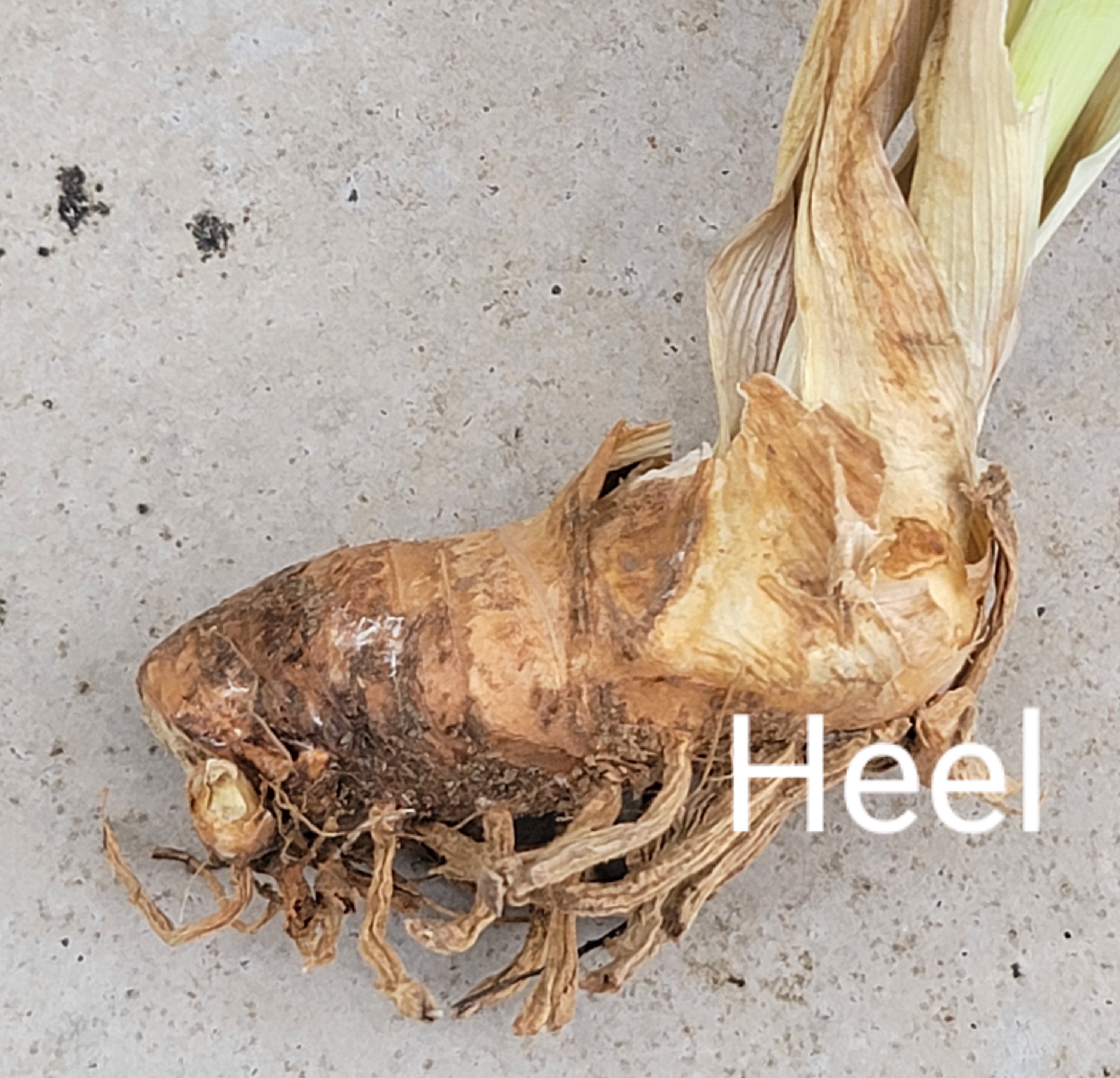


When you’re planting your iris in their new location, remember that iris grow in the direction of the heel so place your rhizomes with the leaves planted in the direction you want the plant to grow.  


Bearded Iris are often planted in areas where they don’t get a lot of care. While they will do okay in clay soils, but they thrive in soils that have been amended, so add a couple of inches of Sheep, Peat and Compost and dig it in 4-5 inches.  Add some Bone Meal or Dutch Bulb Food and place the rhizome so that the roots are fanned out to the side, then add enough soil to cover the roots, leaving the very top of the rhizome exposed. Water in thoroughly. Your iris will establish through the fall and be ready to bloom next spring.  


For the rest of the iris in your garden, remove any dead vegetation, cut the foliage back to 4” to 6” long and fertilize with Bone Meal or Dutch Bulb Food, then water thoroughly. Around Thanksgiving, apply a wood mulch to the iris bed. This will prepare your iris for the winter season ahead, by stabilizing the ground and conserving moisture. Remove the mulch from the top of the rhizome in early spring.


This is also a good time to add new varieties and colors to your garden. We’ve just received our shipments of bearded iris rhizomes, so it’s a great time to add to your collection, while stock is fresh and there’s a good selection of colors.  As you're shopping for bearded iris, you may notice some boxes are labeled "Blooms Spring and Fall". These are "reblooming" iris, that is iris that have been developed to produce blooms in the spring and again in the fall. The same planting guidelines apply.


Pick a good solid rhizome, amend the soil well, add some Bone Meal and make sure you mark the iris, so you’ll remember the name next spring.  With proper care, your iris will bloom reliably for many springs to come.  


Thursday, September 7, 2023

Fall is For Planting


Fall is a great time for gardening. September’s cooler days and warm soil temperatures are a perfect combination for planting perennials, shrubs, roses and trees.  Fall’s weather isn't quite as tricky as it is in the spring, and you don't have that "spring rush" feeling to get everything done after winter. Cooler air temperatures mean much less stress on the plant and more energy for root establishment.  


In addition, there’s a great selection of perennials and shrubs to choose from, including mums and asters, colorful sedums and blanket flowers, as well as ornamental grasses.  Edibles such as raspberries, grapes, blackberries and rhubarb can be planted now, as well as Butterfly Bush, Potentilla, Spirea and other flowering shrubs. 


The key to fall planting, just like every other time of the season, is to prepare the soil.  The advantage this time of year is the soil is warm and drier, making it easier to add amendments. In our typical clay soils, adding organic material to the planting site is key.  


We recommend locally produced bagged soil amendments such as Earth Essentials Sheep, Peat and Compost. Bagged amendments make it easy to take home and place in the garden. Rich in trace minerals, organic material and beneficial microbes, Earth Essentials Sheep, Peat and Compost improves the soil’s physical and biological health, essential for initial planting as well as sustained growth.  Amendments should be incorporated into the planting site at a 50:50 ratio with the existing soil. 


Plan to dig the planting hole twice as wide as the root ball and once again as deep. Once the planting hole is dug, fill it with water and observe how long it takes to drain. If it takes more than five minutes, add more organic material.


Remove the plant from its container and break up the root ball, center it in the hole and back fill with amended soil, using enough to create a shallow basin to facilitate watering.


As you’re filling the planting hole, apply ferti•lome liquid Root Stimulator to reduce transplant shock and stimulate strong root development. 


Keep plants evenly moist. This is best done by checking each plant daily and hand watering as necessary. Water slowly. Fill the moat you built around each plant and let the water slowly seep in. Don’t rely on automatic irrigation for the first few weeks. 


Plant in the evening. This will give the new plant some 8 to 10 hours to begin acclimating without the stress of direct sun and high temperatures.   


When the ground gets cold, usually around Thanksgiving, add a 2" to 3" layer of mulch. This will hold in the moisture, keep the ground cold and stable through the winter helping the plant maintain dormancy and less likely to trigger new growth during any brief warm up periods. Mountain Magic Soil Pep is a good choice for winter mulch. Plan to water all the plants in your landscape every 4-5 weeks during the winter. 


In summary, planting in the fall gives perennials, trees and shrubs time to establish and develop strong root systems, thus giving them vigorous head start next spring.