www.theflowerbin.net

www.theflowerbin.net

Tuesday, June 14, 2022

Planning and Planting for Pollinators


June is Pollinator Month in Colorado, a time to bring focus on the importance of supporting pollinators in our gardens and landscapes. Creating a pollinator friendly garden involves planting and maintaining a variety of perennials, annuals and flowering shrubs, as well as providing water, shelter and nesting sites.  


Perennials with good sources of nectar and pollen include Asters, Black-eyed Susan, Columbine, Coneflower, Digitalis, Gaillardia, Joe-pie Weed, Mums, Penstemon and Sedum.  


Blue Mist Spirea, Lilac, Rose of Sharon, Weigela and Butterfly Bushes are good choices for pollinator friendly shrubs.   Beyond perennials and shrubs, think about incorporating natives, annuals, bulbs and herbs into your pollinator garden. 


Native plants include Columbine, Native Bee Balm, Rocky Mountain Penstemon and Sunset Hyssop.   


Annuals such as Sunflowers, Zinnias, Marigolds, Lantana, Petunias, Salvia will help fill in any gaps in the seasonal bloom cycle.  


Chives, basil, comfrey, mint and lavender are blooming herbs that support pollinators. Cover crops such as Crimson Clover attract pollinators and can be worked into your garden to improve the soil once it stops flowering.  


In the fall, plant spring blooming bulbs such as crocus, hyacinths, allium and tulips to support early foraging pollinators. 


Planting in groups or clusters will bring a focus to your landscape and save pollinator’s energy searching for food.  


Gardening with pollinators in mind should include accessible water. This could be a shallow pot saucer or a birdbath.  Place some flat stones in the birdbath or saucer so pollinators will have a place to land and drink safely. Consider leaving a patch of the garden uncultivated for native bees that burrow.  


For wood and stem-nesting bees, hang a nesting block or place one on the fence or bench.  


Even a small pollinator garden will help support bees, butterflies and other pollinators. With some thought and planning, you can create a destination that pollinators will be attracted to.  

Tuesday, June 7, 2022

June is National Rose Month


There is a long history of roses growing in Colorado. In 1874 Charlotte Hill discovered a fossilized rose leaf preserved in the Upper Eocene Florissant Formation some 34 million years ago. Now in the Smithsonian, the fossil rose Rosa hilliae is named for her. In addition, native species including mountain, Rosa woodsii, prickly rose, Rosa acicularis, and prairie rose, Rosa arkansana can be viewed from the plains to elevations up to 11,700 feet. Wild roses or “species roses” typically have a single, predominately pink flower. Old Garden Roses or heirloom roses are those cultivated prior to 1867. They have a strong fragrance but only bloom once a year.


Cultivated after 1867, Modern Garden Roses are those most familiar to gardeners.


The year 1867 is an important one in rose history, since it marks the debut of the hybrid tea rose. Tall and elegant, hybrid tea roses are by far the most popular rose grown. Available in a wide range of colors, hybrid teas produce individual long-stemmed blooms and flower repeatedly during the season. 


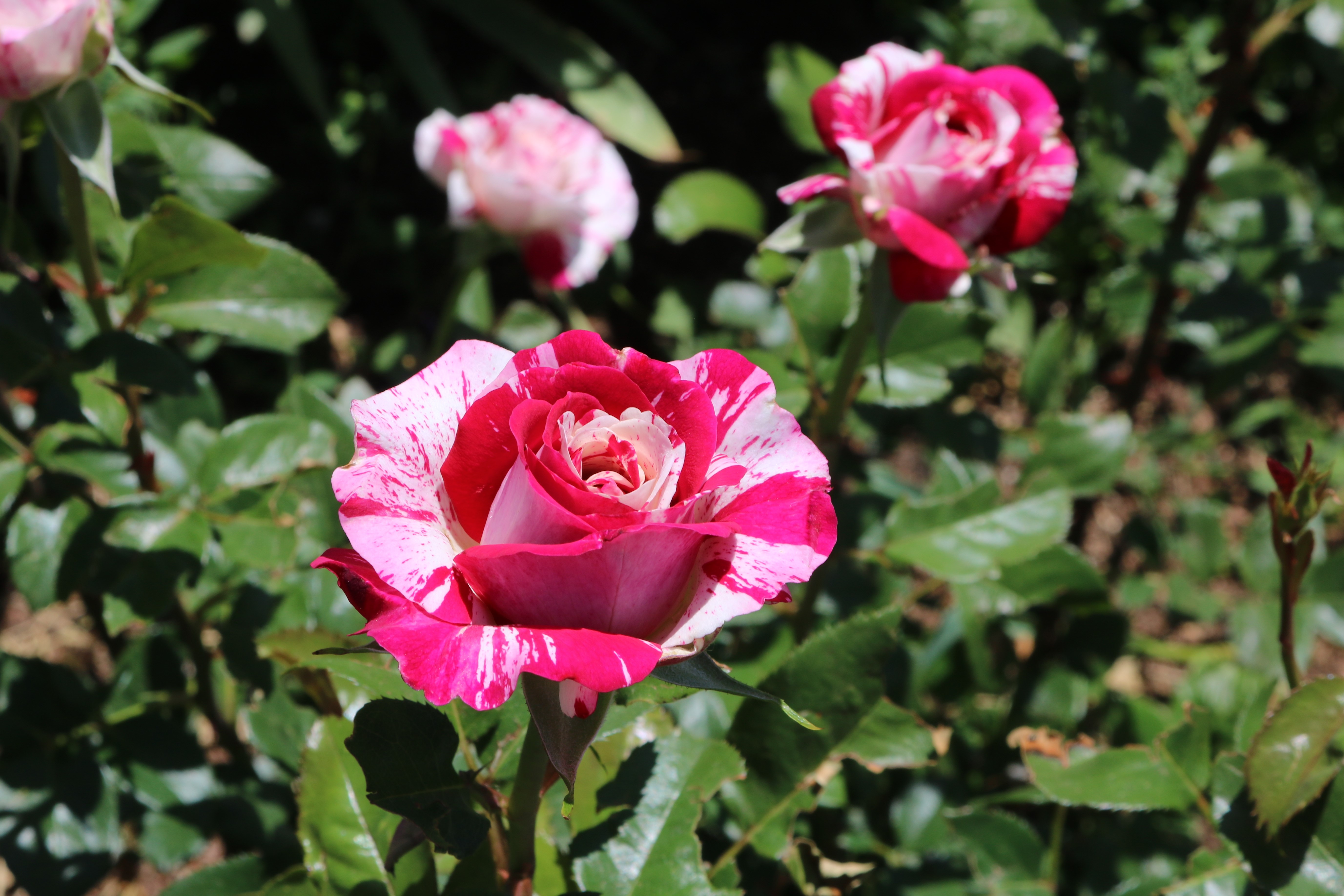
You can even find hybrid tea roses named for celebrities, such as Judy Garland, pictured here. In addition to hybrid teas, modern garden rose varieties include climbers, David Austin, shrub roses, miniature roses, grandifloras and floribundas.


When it comes to growing roses successfully in Colorado, it's important to choose a location that receives at least six hours of direct sun every day, away from trees, shrubs and perennials that compete for sunlight, space and nutrients. Provide adequate space between rose bushes. They don’t do well when crowded together. Prepare the planting site by adding locally produced organic materials. Roses need well-amended soils in order to establish strong root systems and achieve vigorous growth and bloom potential. 


Planted now, roses will establish well and provide color to your garden for many seasons to come.