www.theflowerbin.net
www.theflowerbin.net

Dahlias
are one of the easiest and most spectacular flowers you can grow in your
garden. From mid-summer to first frost, they will flower almost continuously.
Dahlias
are available in a wide variety of colors, shapes and sizes, including ball
dahlias, decorative and dinnerplate dahlias and cactus dahlias.
All told, there
are fourteen distinct groups of dahlias. Dahlias are planted from tubers, generally
in late May through early June. This is the when the soil temperature is warm enough
to safely plant your tubers. Dahlias love the sun, so pick a place in the
garden that gets the most sun during the day. Dahlias will grow in an area where there is
some shade, but the plants will be taller and you’ll typically get fewer
flowers.
When you open the package your dahlias came in, you’ll find one or two
eyes on the tuber. Sometimes you’ll find the tuber has begun to sprout. That’s
okay. It’s still good to plant. Prepare the site by working in some compost and
peat most. Dahlias do best in slightly acidic soils. Since our soils tend to be
higher in pH or more alkaline, adding organic materials will help make the soil
more acidic and improve the drainage.
Add 3" to 4" of organic
material such as peat moss, compost and work it into your existing soil 8"
to 10".
Once you’ve prepared your soil, add a handful of Bone Meal and
work it in a little before you plant your tubers. The package your dahlia tubers came in can
provide valuable information about your dahlia, including height. Large
dinnerplate dahlias can easily reach 4' in height. Flower stalks this tall need
to be staked. It’s best to place the stake when you plant your tubers.
Set the
tuber in the hole with the “eyes” or stalk pointed up. Next, set the stake near
an eye or the stalk. Cover the tuber with soil and water deeply. As the
stalk grows, tie it loosely to the stake to give it support. To do their best,
dahlias need to be fed and watered regularly. Dahlias don’t need a lot of
Nitrogen, but they do need Phosphorous and Potash, so select a fertilizer with
numbers like 5-10-5 or 3-8-8. Fertilize your dahlias about 30 days after you
plant them and again in another 30 days. Water your dahlias deeply, twice a
week. Dahlias will not survive our winters, so you can elect to dig them up in the fall
and store them or simply treat them as annuals and plant new tubers every
spring.
Water
plants for your home pond or garden fountain will enhance the beauty of your water
feature and help improve water quality. Most water plants are tropicals and do
their best in full sun.

You'll learn a lot by reading the label that comes with
each plant. The label will tell you zone rating, height, planting depth and
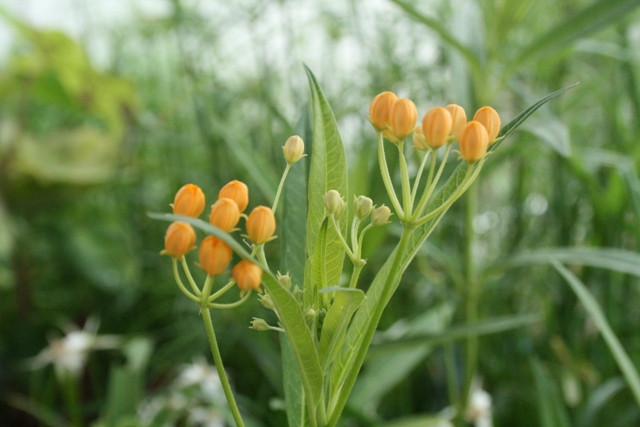
facts about the plant. For example, this Blood Flower tag tells you the
planting depth is 1 to 2. That means the plant will do well in shallow water.
It blooms in the summer when planted in full sun to partial shade. It is a
tropical rated Zone 8 and higher which means it will not survive our winter
weather. Plants with a rating of zone 4 have a better chance of
surviving through the winter. Besides adding interest and color, water plants
will help keep your pond cleaner. For best results, you should aim to cover about
½ of the pond's surface.
The easiest way to do this is to add floaters such as
water hyacinths and water lettuce. Take these plants home and release them on
the surface of the pond. Water hyacinths and water lettuce are really fast
growers and can cover the surface of your pond in a season. Water hyacinths and water lettuce
require full sun to do their best. They
multiply quickly in full sun and will shade and cool the water.
Water lilies
also help cover the pond surface and will bloom in full sun. Water lilies can
survive our winters provided they are submerged to a depth of 3 feet or more.
Submersed plants like Red Stemmed Parrot's Feather help oxygenate the
water, providing a better environment for fish. Aquatic plants also help absorb nutrients which reduces the algae food supply,
resulting in less algae. Add more interest to your pond with blooming water
plants such as cannas,
Asclepias curassavica Blood Flower,
Water Zinnias
and Star Grass.
Water hyacinths will bloom a delicate purple flower.
Plants with big leaves such as Colocasia will grow tall during the season
adding a different look to your pond. Water plants serve to accent the pond and
to protect fish as well as improve water quality. They will make your pond or garden
fountain a stand out feature of your landscape all summer long.