www.theflowerbin.net

www.theflowerbin.net

Tuesday, November 2, 2021

Fall Pruning Tips


Pruning is a part of all tree and shrub maintenance, but the key is to prune at the right time of the season. Timed right, pruning encourages growth, improves plant health and can increase flower and fruit production.  At this point of the season, trees focus their energy on their roots, preparing for the winter ahead. There’s not enough time or energy to allow pruning cuts to heal.  Pruning during the dormant season (February/March) is advantageous because the structure of the tree is more visible. Crossing branches, as well as dead, diseased limbs can be identified more easily and removed. In addition, there’s less sap loss and the resultant new growth has time to mature naturally before summer’s heat kicks in.  


Correct pruning helps keep ornamental shrubs in shape, gets rid of dead and diseased wood, encourages healthy growth and generally promotes more blooms. Getting the most from your flowering shrubs this and every season depends on three things; knowing when to prune, how to prune and using the right pruning tools. Flowering shrubs can be divided into to two types; spring blooming and summer blooming. Spring blooming shrubs such as forsythia, lilac, ninebark and weigela already have this spring's flower buds in place. They're said to bloom on "old wood" because soon after flowering last season, they began to set the buds for next season's blooms. If you prune these shrubs now, you'll remove most if not all of the flower buds. The time to prune ornamental shrubs that flower in spring and early summer, is within a month after they stop blooming.  Summer flowering shrubs such as butterfly bush, blue-mist spirea, potentilla and hardy hibiscus can be pruned now, because these shrubs create their flower buds once they begin growing in the spring.  They put on new growth  and flower on this "new wood".


You can prune roses back to between 24 inches and 30 inches. but avoid severe pruning. We’ll talk more about fall rose care in a future article. Perennials such as Catmint (Nepeta), columbine, daylilies, phlox, peonies, salvia, veronica, and yarrow can be pruned to the ground now. 


Ornamental grasses can be pruned now, however they will add interest to your winter garden, so you can wait and prune them in early spring before they start to green up. 


If you had powdery mildew, black spot or any other disease on your roses or perennials, it’s important to clean up all leaves, branches or canes and dispose of it - do not put this debris in your compost pile. In the spring treat the area with dusting sulfur. 


If you have questions concerning pruning or general fall prep, stop in. We’ll be glad to help you. 


Tuesday, October 26, 2021

Plant These Bulbs Now for Early Spring Color


Often passed over for larger-flowering bulbs, minor bulbs will give your garden a head start on spring, extending the season by blooming in late February and early March. While short in stature with daintier flowers, minor bulbs are a welcome sight in early spring, often blooming through the snow.  


Brightly colored crocus blooms are soon followed in succession by other minor bulbs, including dwarf iris, species tulips, snowdrops, early-blooming grape hyacinths and early-blooming daffodils, such as the Rip Van Winkle variety.  


Minor bulbs are hardy in our gardening zone, meaning they will survive our winters and often bloom season after season, with just a little care.  Regardless of the variety of bulbs you choose, these bulbs will do best when planted in a sunny location in well-amended soil. Produced in Platteville, Earth Essentials Organic Compost or Sheep, Peat and Compost are excellent products to add to the planting site.  


Once the soil is prepared, dig in some Dutch Bulb Food. Added at planting time, this fertilizer will improve rooting and bulb growth. When it comes to planting, a good rule of thumb is to plant bulbs to a depth of three times their height. A one-inch crocus bulb should be buried three inches deep. You can vary the bloom time by the depth you plant each bulb. Shallow planted bulbs will bloom earlier; deeper bulbs will bloom later in the season. The risk with planting too shallow is the bulb may not survive the winter. Another trick to control bloom time is to add two or three inches of mulch to the bed. This will keep the ground cold and slow bloom time.  


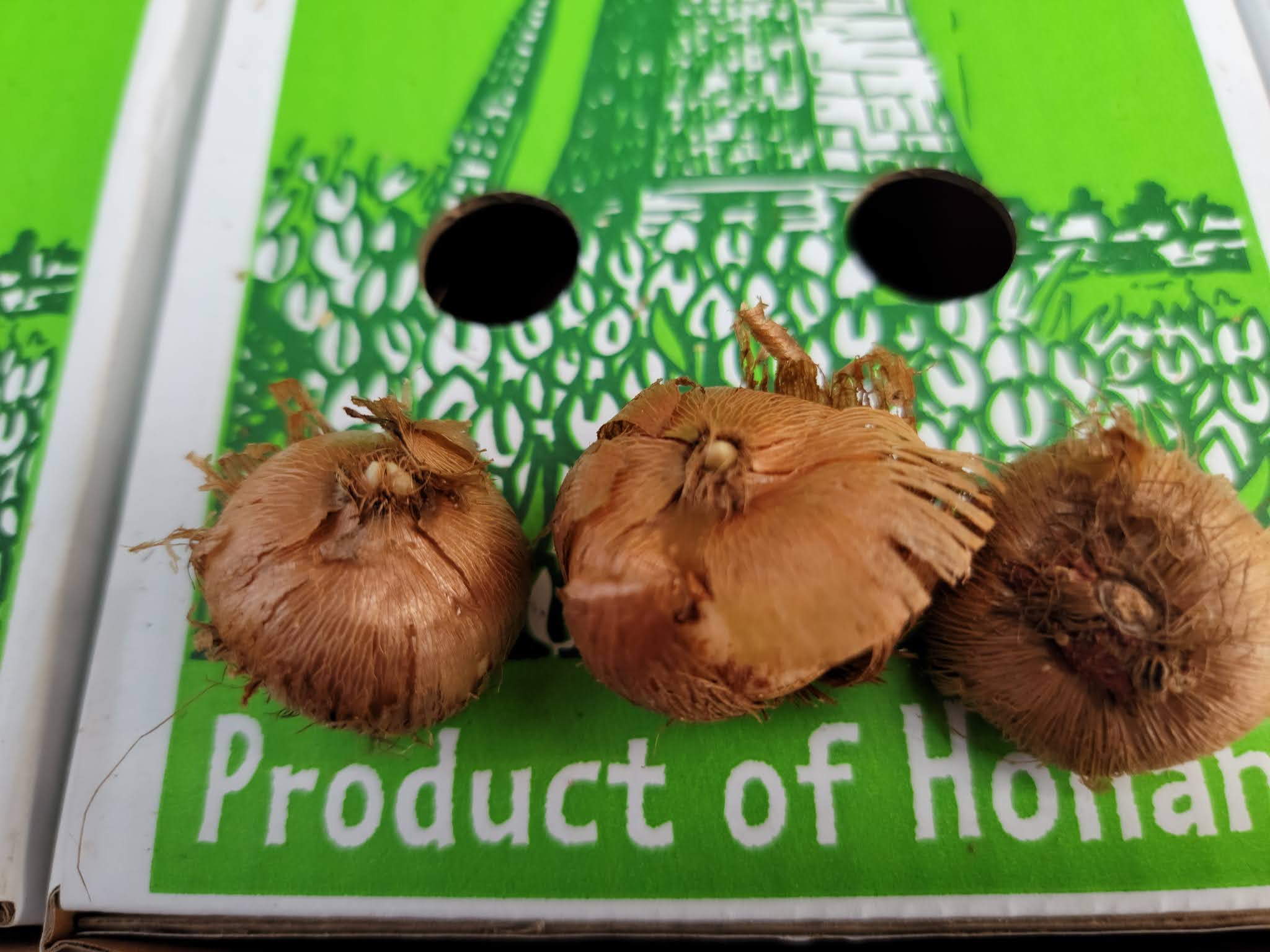
Knowing which side of the bulb is up is also important. In some cases, the tapered end of the bulb is the top; the bottom is flatter and often shows evidence of roots. For smaller bulbs, generally the flat side goes down. Look for evidence of roots. The root side goes down. In this illustration, the two bulbs on the left are right side up. The one on the right shows the root side.  The flat side goes down, when you plant them. 


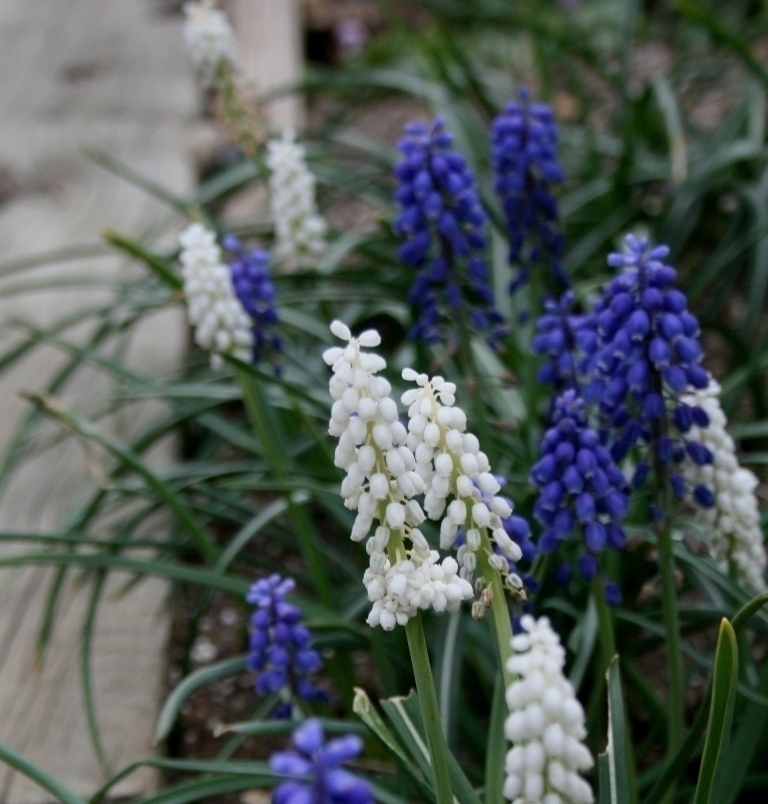
Muscari, known as grape hyacinths, are hardy spring bloomers that produce blue or purple flowers that look like bunches of grapes, hence the common name. They will do well in sun or semi-shade and spread naturally. Galanthus are very early to arrive in spring and will do well in sun or partial shade. Species tulips such as Tarda, are hardy, early blooming and will return season after season. 


For best effect, minor bulbs should be planted in clusters, not lined out in rows.  Check on your bulbs through the winter. They should be watered every four to five weeks, along with the rest of the trees and shrubs in your landscape.   If you have questions regarding selecting and planting bulbs, stop in the store. We'll be glad to help you.